






In modern medical diagnostics and life science research, proteins serve as key biomarkers directly linked to disease phenotypes, making their accurate and rapid detection highly important. However, conventional detection technologies face multiple limitations. For example, immunoassays such as ELISA require tedious separation and washing steps...
In modern medical diagnostics and life science research, proteins serve as key biomarkers directly linked to disease phenotypes, making their accurate and rapid detection highly important. However, conventional detection technologies face multiple limitations. For example, immunoassays such as ELISA require tedious separation and washing steps or depend on stringent conditions for antibody pairs, making it difficult to meet the needs of point-of-care testing and high-throughput analysis. Although mass spectrometry is considered the "gold standard" in proteomics research, it relies on large, expensive equipment and involves lengthy analytical procedures.
In the long-standing battle between humans and viruses, the continuous mutation of viruses resembles an arms race where “as virtue rises one foot, vice rises ten.” As the shadow of the COVID-19 pandemic gradually recedes, we are still not entirely free from the threat posed by coronaviruses. The emergence of new viral variants continues to...
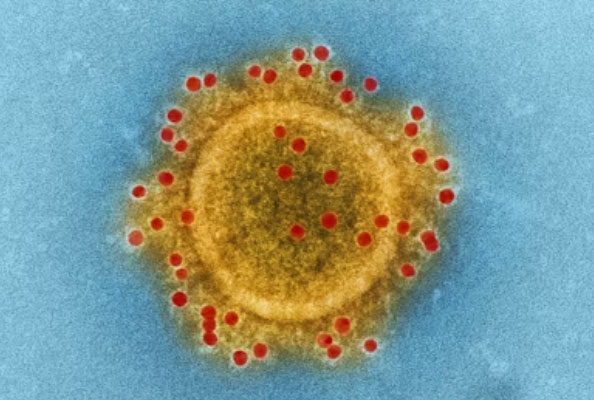
In the long-standing battle between humans and viruses, the continuous mutation of viruses resembles an arms race where “as virtue rises one foot, vice rises ten.” As the shadow of the COVID-19 pandemic gradually recedes, we are still not entirely free from the threat posed by coronaviruses. The emergence of new viral variants continues to challenge global public health security. Against this backdrop, a research team comprising multiple world-renowned institutions, including the University of Pittsburgh, has successfully screened a type of pan-sarbecovirus nanobody (psNbs) with "super immunity" from immunized alpacas using innovative technological approaches. This study, published in Cell Reports, aims to identify a universal solution capable of combating an entire virus family.