









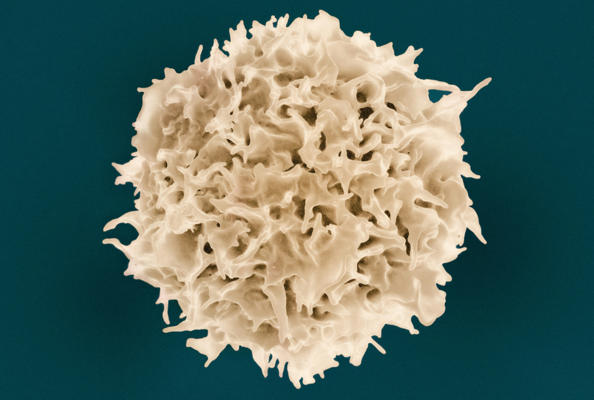
T-cell malignancies are a group of highly aggressive hematologic tumors with high relapse rates and generally poor patient prognosis. A significant challenge arises because CD5, a characteristic marker of malignant T-cells, is also expressed on almost all normal T-cells. This makes CD5-targeting CAR-T therapies unable to distinguish friend from...
T-cell malignancies are a group of highly aggressive hematologic tumors with high relapse rates and generally poor patient prognosis. A significant challenge arises because CD5, a characteristic marker of malignant T-cells, is also expressed on almost all normal T-cells. This makes CD5-targeting CAR-T therapies unable to distinguish friend from foe, leading them to attack normal T-cells and potentially cause immune function failure. Natural Killer (NK) cells, as key effector cells of the immune system, can recognize and eliminate tumor cells without prior antigen sensitization. Furthermore, their surface lacks CD5 expression, making them ideal effector cells for targeting CD5+ tumor cells.
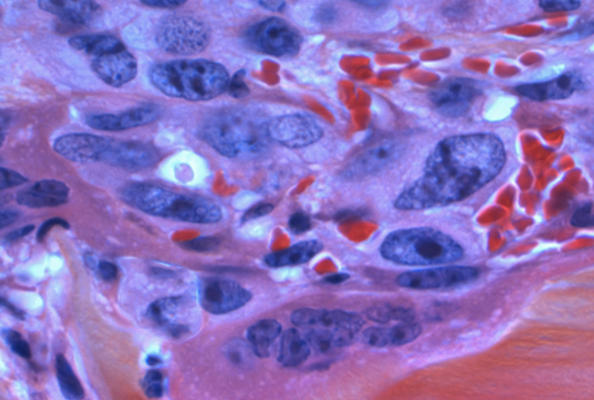
The tumor suppressor protein p16INK4a (p16) plays a critical role in cell cycle regulation by inhibiting CDK4/6 kinase activity, thereby preventing abnormal cell proliferation and acting as a natural "cancer guardian." However, in many cancers, the p16 gene is frequently inactivated by mutations. Missense mutations, in particular, lead to...
The tumor suppressor protein p16INK4a (p16) plays a critical role in cell cycle regulation by inhibiting CDK4/6 kinase activity, thereby preventing abnormal cell proliferation and acting as a natural "cancer guardian." However, in many cancers, the p16 gene is frequently inactivated by mutations. Missense mutations, in particular, lead to protein structural instability, making p16 prone to degradation or misfolding, and consequently, loss of its tumor-suppressive function. It is estimated that over half of familial melanomas and many sporadic tumors harbor p16 mutations. Traditional gene therapies or small-molecule drugs struggle to directly "fix" such structurally unstable proteins. Therefore, finding molecular chaperones that can stabilize mutant p16 has emerged as a new therapeutic direction.
肿瘤抑制蛋白p16INK4a(简称p16)在细胞周期调控中扮演着关键角色,它通过抑制CDK4/6激酶活性,阻止细胞异常增殖,是天然的“抗癌卫士”。然而,在多种癌症中,p16基因常因突变而失活,尤其是错义突变导致蛋白质结构不稳定、易于降解或错误折叠,从而丧失抑癌功能。据统计,超过一半的家族性黑色素瘤和多种散发性肿瘤中均存在p16突变。传统的基因疗法或小分子药物难以直接“修复”这类结构不稳定的蛋白,因此,寻找能够稳定突变p16的分子伴侣成为治疗的新方向。近日,一项发表于《Structure》期刊的突破性研究,为癌症治疗领域带来了全新希望。该研究由英国剑桥大学药理学系与纽卡斯尔大学癌症研究中心联合开展,聚焦纳米抗体在修复p16功能中的应用,成功破解了p16突变导致的结构失稳难题,为靶向癌症治...
肿瘤抑制蛋白p16INK4a(简称p16)在细胞周期调控中扮演着关键角色,它通过抑制CDK4/6激酶活性,阻止细胞异常增殖,是天然的“抗癌卫士”。然而,在多种癌症中,p16基因常因突变而失活,尤其是错义突变导致蛋白质结构不稳定、易于降解或错误折叠,从而丧失抑癌功能。据统计,超过一半的家族性黑色素瘤和多种散发性肿瘤中均存在p16突变。传统的基因疗法或小分子药物难以直接“修复”这类结构不稳定的蛋白,因此,寻找能够稳定突变p16的分子伴侣成为治疗的新方向。近日,一项发表于《Structure》期刊的突破性研究,为癌症治疗领域带来了全新希望。该研究由英国剑桥大学药理学系与纽卡斯尔大学癌症研究中心联合开展,聚焦纳米抗体在修复p16功能中的应用,成功破解了p16突变导致的结构失稳难题,为靶向癌症治疗开辟了全新路径。

With the groundbreaking progress of immune checkpoint inhibitors (ICIs) in human cancer therapy, the demand for similar treatments in companion animals, such as dogs, is increasingly growing. Spontaneous canine tumors share high similarities with human tumors in terms of immune microenvironment, genetic background, and clinical progression,...
With the groundbreaking progress of immune checkpoint inhibitors (ICIs) in human cancer therapy, the demand for similar treatments in companion animals, such as dogs, is increasingly growing. Spontaneous canine tumors share high similarities with human tumors in terms of immune microenvironment, genetic background, and clinical progression, making them ideal translational medicine models. However, the market still lacks efficient and specific immunotherapeutic drugs targeting canine PD-L1. Most existing antibodies are derived from murine sources or are humanized, suffering from issues like strong immunogenicity, high production costs, and poor tissue penetration. Therefore, developing a novel canine PD-L1-targeting inhibitor based on Nanobodies (Nbs) holds promise not only for advancing veterinary oncology but also for providing valuable references for human immunotherapy research.
随着免疫检查点抑制剂(ICI)在人类癌症治疗中取得突破性进展,人们对类似疗法在伴侣动物(如狗)中的应用需求日益增长。犬类自发肿瘤与人类肿瘤在免疫微环境、遗传背景和临床进展上具有高度相似性,是理想的转化医学模型。然而,目前市场上仍缺乏针对犬类PD-L1的高效、特异性免疫治疗药物。大多数现有抗体源于鼠源或人源化改造,存在免疫原性强、生产成本高、穿透性差等问题。因此,开发一种基于纳米抗体(Nanobody,Nb)的新型犬类PD-L1靶向抑制剂,不仅有望推动兽医肿瘤学的发展,也为人类免疫治疗研究提供有价值的参考。