









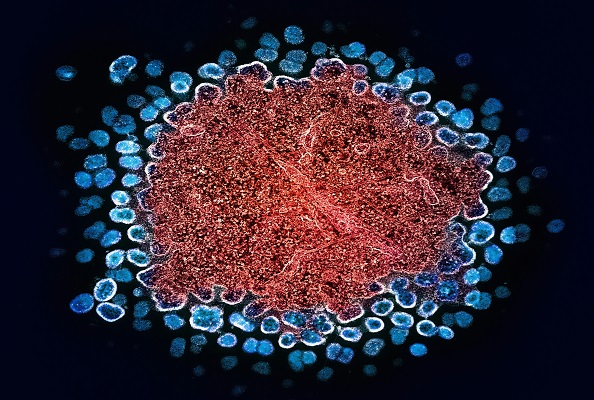
Pathogenic microorganisms can cause a variety of infectious diseases. Large - scale outbreaks of infectious diseases such as Ebola hemorrhagic fever, COVID - 19 infection, and malaria pose severe threats to human life and health, and even trigger social crises. This has driven researchers to seek simpler and more effective methods for treating...
Pathogenic microorganisms can cause a variety of infectious diseases. Large - scale outbreaks of infectious diseases such as Ebola hemorrhagic fever, COVID - 19 infection, and malaria pose severe threats to human life and health, and even trigger social crises. This has driven researchers to seek simpler and more effective methods for treating infectious diseases. Controlling the source of infection, cutting off the route of transmission, and protecting susceptible populations are the keys to preventing and controlling infectious diseases.

2024年5月25日,由武汉产业创新发展研究院(武创院)带领香港海外学人联合会的众多香港学者莅临武汉纳博生命科技有限公司(纳博生命)羊驼繁育实验基地进行访问考察。
病原微生物可以引起各种各样的传染性疾病,埃博拉出血热、新冠病毒感染、疟疾等传染病疫情的大规模暴发,对人类生命健康造成严重威胁甚至引发社会危机,这促使研究人员寻求更加简洁有效的方法治疗传染病,而控制传染源,切断传播途径,保护易感人群是防控传染病的关键。

Since their discovery, nanobodies have been widely applied in fields such as tumor/neurological disease research and imaging diagnosis. In recent years, researchers have gradually expanded their application to more domains, including food safety and environmental hygiene testing. Recently, researchers have conducted studies on the application...
Since their discovery, nanobodies have been widely applied in fields such as tumor/neurological disease research and imaging diagnosis. In recent years, researchers have gradually expanded their application to more domains, including food safety and environmental hygiene testing. Recently, researchers have conducted studies on the application of nanobodies in animal husbandry.

Chemokines are a class of small cytokines or signaling proteins secreted by cells. They are so named because of their ability to induce directional chemotaxis of nearby responsive cells. All their receptors belong to the G protein - coupled receptor (GPCR) family with 7 - transmembrane domains, and are mainly expressed in cells such as...
Chemokines are a class of small cytokines or signaling proteins secreted by cells. They are so named because of their ability to induce directional chemotaxis of nearby responsive cells. All their receptors belong to the G protein - coupled receptor (GPCR) family with 7 - transmembrane domains, and are mainly expressed in cells such as neutrophils, macrophages, epithelial cells, smooth muscle cells, and fibroblasts [1].