









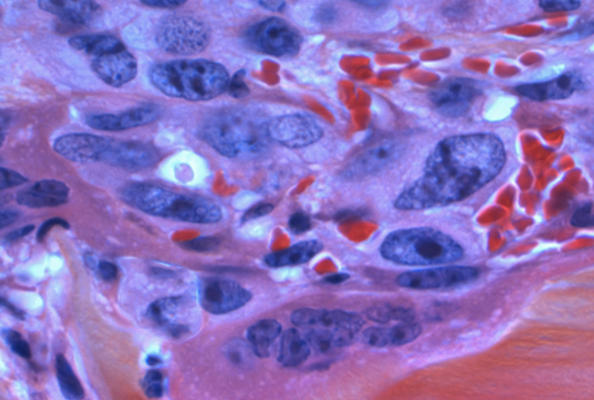
The tumor suppressor protein p16INK4a (p16) plays a critical role in cell cycle regulation by inhibiting CDK4/6 kinase activity, thereby preventing abnormal cell proliferation and acting as a natural "cancer guardian." However, in many cancers, the p16 gene is frequently inactivated by mutations. Missense mutations, in particular, lead to protein…
The tumor suppressor protein p16INK4a (p16) plays a critical role in cell cycle regulation by inhibiting CDK4/6 kinase activity, thereby preventing abnormal cell proliferation and acting as a natural "cancer guardian." However, in many cancers, the p16 gene is frequently inactivated by mutations. Missense mutations, in particular, lead to protein structural instability, making p16 prone to degradation or misfolding, and consequently, loss of its tumor-suppressive function. It is estimated that over half of familial melanomas and many sporadic tumors harbor p16 mutations. Traditional gene therapies or small-molecule drugs struggle to directly "fix" such structurally unstable proteins. Therefore, finding molecular chaperones that can stabilize mutant p16 has emerged as a new therapeutic direction.

With the groundbreaking progress of immune checkpoint inhibitors (ICIs) in human cancer therapy, the demand for similar treatments in companion animals, such as dogs, is increasingly growing. Spontaneous canine tumors share high similarities with human tumors in terms of immune microenvironment, genetic background, and clinical progression,…
With the groundbreaking progress of immune checkpoint inhibitors (ICIs) in human cancer therapy, the demand for similar treatments in companion animals, such as dogs, is increasingly growing. Spontaneous canine tumors share high similarities with human tumors in terms of immune microenvironment, genetic background, and clinical progression, making them ideal translational medicine models. However, the market still lacks efficient and specific immunotherapeutic drugs targeting canine PD-L1. Most existing antibodies are derived from murine sources or are humanized, suffering from issues like strong immunogenicity, high production costs, and poor tissue penetration. Therefore, developing a novel canine PD-L1-targeting inhibitor based on Nanobodies (Nbs) holds promise not only for advancing veterinary oncology but also for providing valuable references for human immunotherapy research.
随着免疫检查点抑制剂(ICI)在人类癌症治疗中取得突破性进展,人们对类似疗法在伴侣动物(如狗)中的应用需求日益增长。犬类自发肿瘤与人类肿瘤在免疫微环境、遗传背景和临床进展上具有高度相似性,是理想的转化医学模型。然而,目前市场上仍缺乏针对犬类PD-L1的高效、特异性免疫治疗药物。大多数现有抗体源于鼠源或人源化改造,存在免疫原性强、生产成本高、穿透性差等问题。因此,开发一种基于纳米抗体(Nanobody,Nb)的新型犬类PD-L1靶向抑制剂,不仅有望推动兽医肿瘤学的发展,也为人类免疫治疗研究提供有价值的参考。
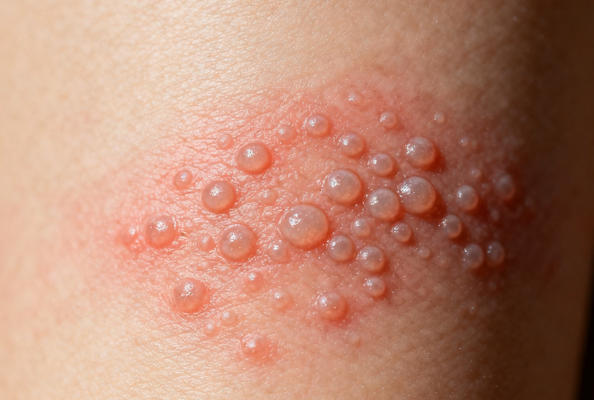
Herpes Simplex Virus (HSV) is primarily categorized into HSV-1 and HSV-2. The former often causes oral herpes, while the latter is a major cause of genital herpes. Both viruses can disseminate to other organs or lead to severe, potentially fatal complications, including herpes keratitis, herpes encephalitis, neonatal herpes, among others.…
Herpes Simplex Virus (HSV) is primarily categorized into HSV-1 and HSV-2. The former often causes oral herpes, while the latter is a major cause of genital herpes. Both viruses can disseminate to other organs or lead to severe, potentially fatal complications, including herpes keratitis, herpes encephalitis, neonatal herpes, among others. Existing therapeutics like acyclovir can only inhibit viral replication but cannot prevent latent infection or recurrence. Furthermore, as the viral glycoprotein B (gB) undergoes conformational changes, the number of drug-resistant viral strains continues to rise annually.
HSV(单纯性疱疹病毒)主要分为HSV-1型与HSV-2型,前者多引起口唇疱疹,而后者多引起生殖器疱疹。这两种病毒还可能扩散至其他器官或引发严重并发症,包括疱疹性角膜炎、疱疹性脑炎、新生儿疱疹等等致命并发症。现有治疗药物阿昔洛韦仅能抑制病毒复制,但无法阻止潜伏感染与复发,且随着病毒gB蛋白(包膜糖蛋白B)的构象转换,病毒耐药毒株数量会逐年上升。