









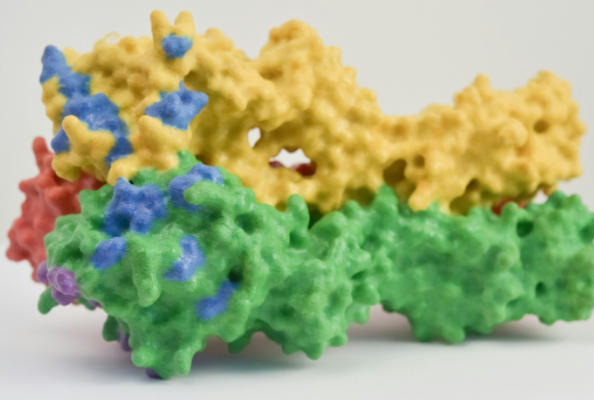
TSLP(胸腺基质淋巴细胞生成素)是一种具有多效性的细胞因子,主要由上皮细胞、成纤维细胞、肥大细胞等分泌,主要作用于树突状细胞、T细胞、B细胞等多种细胞的激活、分化和增殖,并使其分泌Th2细胞因子,激活JAK-STAT等信号通路,进而引发Th2型免疫反应,在免疫调节、炎症反应及疾病发生中发挥关键作用。
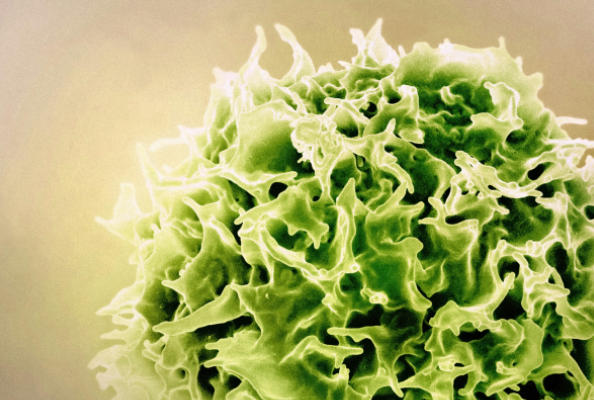
CD5(Cluster of Differentiation 5)是一种关键的跨膜糖蛋白受体,隶属于清道夫受体家族,其核心功能是负向调节T细胞受体(TCR)和B细胞受体(BCR)介导的信号传导,维持机体免疫耐受,避免淋巴细胞过度活化。如在肿瘤细胞中,CD5通过调控NF-κB、PI3K/Akt等通路,促进肿瘤细胞增殖存活并抑制凋亡。CD5是T细胞的经典标志物,几乎在所有成熟T细胞表面都有表达。此外,它也在部分B细胞和NK细胞亚群中表达,但在正常造血干细胞及非造血实体组织中不表达。这种高度受限的表达谱,为开发高特异性、低脱靶毒性的靶向疗法奠定了理想基础。
CD5 (Cluster of Differentiation 5) is a key transmembrane glycoprotein receptor belonging to the scavenger receptor family. Its core function is to negatively regulate signaling mediated by the T-cell receptor (TCR) and B-cell receptor (BCR), thereby maintaining immune tolerance in the body and preventing excessive lymphocyte activation. For…
CD5 (Cluster of Differentiation 5) is a key transmembrane glycoprotein receptor belonging to the scavenger receptor family. Its core function is to negatively regulate signaling mediated by the T-cell receptor (TCR) and B-cell receptor (BCR), thereby maintaining immune tolerance in the body and preventing excessive lymphocyte activation. For instance, within tumor cells, CD5 promotes proliferation, survival, and inhibits apoptosis by regulating pathways such as NF-κB and PI3K/Akt. CD5 is a classic marker for T cells and is expressed on the surface of nearly all mature T cells. Additionally, it is expressed on subsets of B cells and NK cells but is not expressed on normal hematopoietic stem cells or non-hematopoietic solid tissues. This highly restricted expression profile provides an ideal foundation for developing highly specific, low off-target toxicity targeted therapies.

程序性细胞死亡蛋白1(PD-1)是一种重要的免疫抑制受体,主要在T细胞、B细胞、自然杀伤细胞以及其他免疫细胞中表达。PD-1通过与其配体PD-L1和PD-L2结合,发挥抑制免疫反应的作用。在正常免疫反应中,PD-1的激活是防止免疫系统过度活跃的一种自我保护机制,帮助免疫系统避免对自体组织的攻击。然而,在肿瘤免疫逃逸过程中,肿瘤细胞通过上调PD-L1表达与PD-1结合,抑制T细胞的免疫活性,从而逃逸免疫监视。此外,PD-1的异常激活在自免疾病中也起到了重要作用。通过PD-1与其配体的相互作用,免疫细胞的活性被抑制,导致免疫系统无法有效清除自身细胞或组织,这也是多种自免性疾病发生的一个重要机制。
Programmed cell death protein 1 (PD-1) is an important immunosuppressive receptor expressed mainly on T cells, B cells, natural killer cells, and other immune cells. PD-1 exerts its inhibitory function by binding to its ligands PD-L1 and PD-L2. In normal immune responses, the activation of PD-1 serves as a self-protective mechanism to prevent an…
Programmed cell death protein 1 (PD-1) is an important immunosuppressive receptor expressed mainly on T cells, B cells, natural killer cells, and other immune cells. PD-1 exerts its inhibitory function by binding to its ligands PD-L1 and PD-L2. In normal immune responses, the activation of PD-1 serves as a self-protective mechanism to prevent an overactive immune system, helping to avoid attacks on self-tissues. However, during tumor immune escape, tumor cells upregulate PD-L1 expression to bind with PD-1, inhibiting T cell activity and thereby evading immune surveillance. Furthermore, abnormal activation of PD-1 also plays a significant role in autoimmune diseases. Through the interaction between PD-1 and its ligands, immune cell activity is suppressed, preventing the immune system from effectively clearing abnormal self-cells or tissues, which is an important mechanism in the development of various autoimmune diseases.