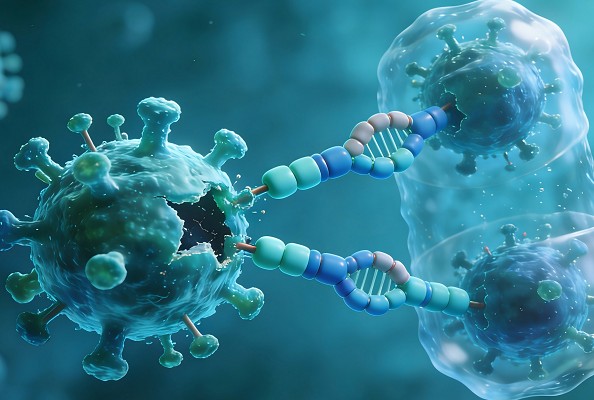






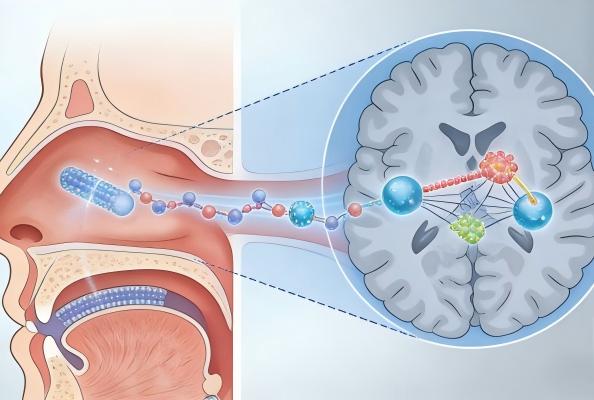
A recent international collaborative research team published a landmark study in the top-tier journal Nature Communications. For the first time, they successfully developed a nanobody (Nb20) targeting a novel brain receptor, the "metabotropic glycine receptor (mGlyR)," and achieved rapid, potent, and long-lasting antidepressant effects in a mouse…
A recent international collaborative research team published a landmark study in the top-tier journal Nature Communications. For the first time, they successfully developed a nanobody (Nb20) targeting a novel brain receptor, the "metabotropic glycine receptor (mGlyR)," and achieved rapid, potent, and long-lasting antidepressant effects in a mouse model through non-invasive intranasal delivery. This research not only validates the tremendous potential of mGlyR as a new antidepressant target but also demonstrates the feasibility of nanobodies as novel biologics for treating brain disorders, offering a new therapeutic paradigm for intractable neuropsychiatric conditions.
So, what are the key findings of this "landmark" study, and what is its mechanism of action?
近期一支国际联合科研团队在顶级期刊《自然·通讯》上发表了一项具有里程碑意义的研究。他们首次成功开发出一种靶向新型大脑受体“代谢型甘氨酸受体(mGlyR)”的纳米抗体(Nb20),并通过非侵入性的鼻内给药方式,在小鼠模型中实现了快速、强效且持久的抗抑郁效果。这项研究不仅验证了mGlyR作为抗抑郁新靶点的巨大潜力,更展示了纳米抗体作为治疗脑部疾病新型生物制剂的可行性,为难以治愈的神经精神疾病带来了全新的治疗范式。
那么,这项被誉为“里程碑”的研究具体取得了哪些关键发现?其作用机制又是怎样的?
In the golden track of cancer immunotherapy, immunotherapy targeting PD-1 (Programmed Death Receptor 1) has become a classic paradigm, but its single-target strategy faces bottlenecks in clinical response rate and drug resistance. With the deepening understanding of tumor immune escape mechanisms, PD-L1 (Programmed Death Ligand 1), as a…
In the golden track of cancer immunotherapy, immunotherapy targeting PD-1 (Programmed Death Receptor 1) has become a classic paradigm, but its single-target strategy faces bottlenecks in clinical response rate and drug resistance. With the deepening understanding of tumor immune escape mechanisms, PD-L1 (Programmed Death Ligand 1), as a key ligand of PD-1, has gradually moved from the "background pathway" to the "center stage" and become one of the core targets for a new generation of immune combination therapy and multi-mechanism synergistic intervention. Since the approval of the first inhibitor, it has rewritten the treatment outcomes of countless cancer patients with its clear mechanism of action and broad-spectrum anti-cancer effects. The rise of nanobodies is breaking through its clinical application bottlenecks. Combined with the latest research results in 2026, the potential of this classic target continues to explode.
Today, we follow the R&D context of PD-L1 to discuss its core value, latest breakthroughs, and how nanobodies have become the "key to breaking the deadlock"!
在癌症免疫治疗的黄金赛道上,以PD-1(程序性死亡受体1)为靶点的免疫治疗虽已成为经典范式,但其单靶点策略在临床响应率与耐药性上面临瓶颈。随着对肿瘤免疫逃逸机制认知的不断深化,作为PD-1的关键配体,PD-L1(细胞程序性死亡配体1)逐渐从“背景通路”走向“舞台中央”,成为新一代免疫联合治疗与多机制协同干预的核心靶点之一。自首个抑制剂获批以来,它凭借明确的作用机制、广谱的抗癌效果,改写了无数癌症患者的治疗结局,而纳米抗体的崛起,正破解其临床应用瓶颈,结合2026年最新研究成果,这个经典靶点的潜力持续爆发。
今天,我们就循着PD-L1的研发脉络,聊聊它的核心价值、最新突破,以及纳米抗体如何成为其“破局关键”!